

Kings-Tulare Smart Referral Network Alliance Meeting | October 15, 2026
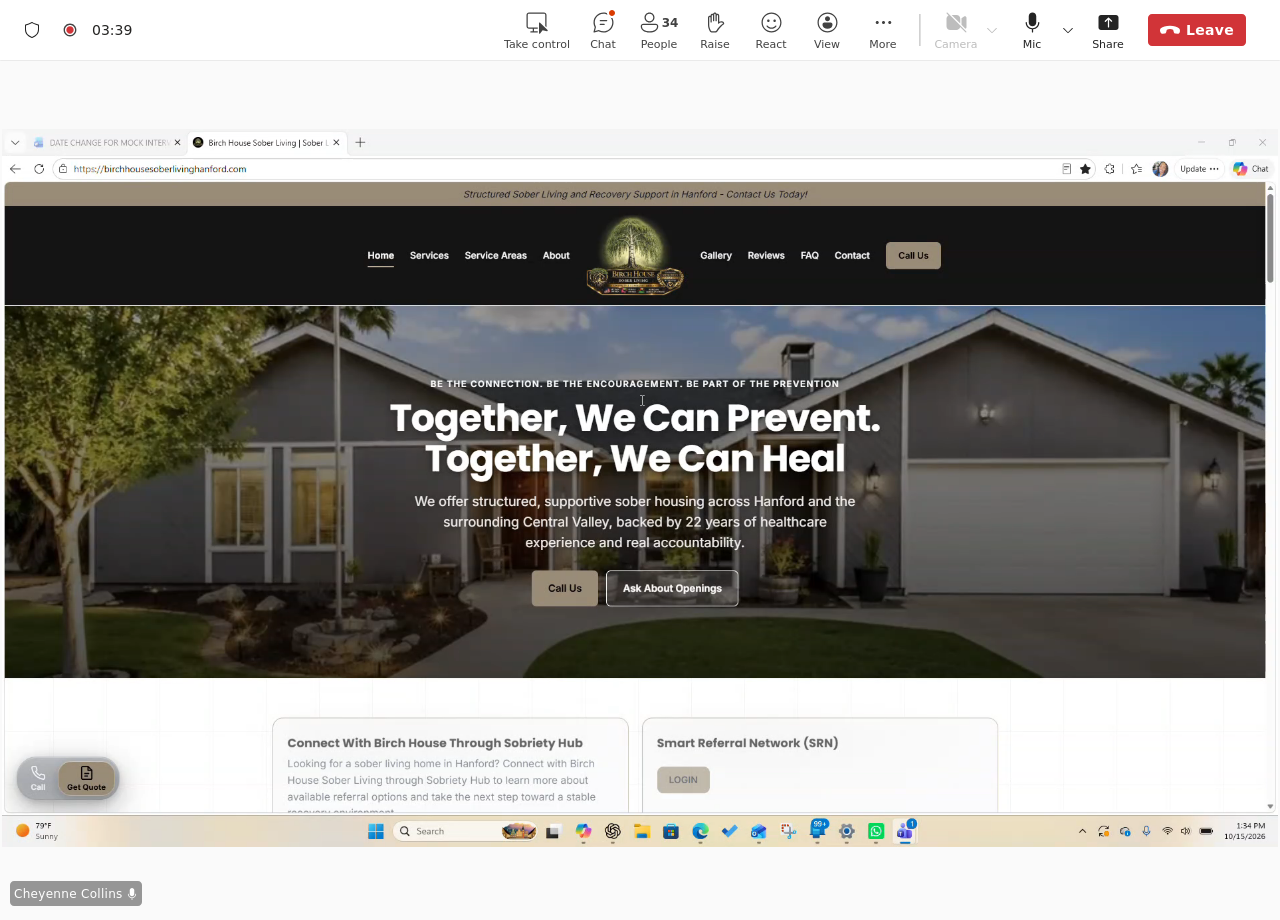
On October 15, 2026, community partners from across Kings and Tulare counties gathered virtually for the monthly Kings/Tulare Smart Referral Network (SRN) Alliance Meeting. Facilitated by Maria Valdez and Fedieson Landicho, the meeting featured regional referral updates, an agency spotlight from Birch House Sober Living, a demonstration of new SRN 2.0 features, partner feedback, and community announcements.
Welcome & County Updates
The meeting opened with updates on Smart Referral Network activity and continued efforts to expand the regional network.
Tulare County SRN Update
Fedieson Landicho, Tulare County SRN Coordinator, shared that outreach and planning continue for the onboarding of additional community partners later in the year.
Kings County SRN Update
Maria Valdez, Kings County SRN Coordinator, reported strong first-quarter referral outcomes. Kings County partners sent 205 referrals, with 199 receiving a completed closed-loop response. Only six referrals remained open for follow-up in the next quarter, demonstrating the value of active partner participation and timely responses.
Agency Spotlight: Birch House Sober Living
Cheyenne Collins, owner and operator of Birch House Sober Living, introduced partners to the organization’s nonmedical sober-living services for adults rebuilding their lives in recovery.
Supporting Stability and Recovery
Structured Housing: Birch House currently operates an all-male sober-living home in Hanford with a 24-hour house manager, meals, and additional on-site amenities.
Employment Assistance: Residents receive help finding work, including connections with employers intended to support job placement within the first 30 to 45 days of residency.
Transportation Support: Staff help residents travel to appointments and connect with services in the community.
Flexible Referrals: Referrals may come from case managers, churches, behavioral health providers, hospitals, and other community partners. People currently on parole may also be considered.
Coordinated Connections: Birch House accepts referrals through SRN and uses the network to connect residents with services such as mental health support.
Real-Time Availability: Partners can also use Sobriety Hub to review available beds and communicate with Birch House staff.
Birch House currently houses eight residents at its Kings County location. Length of stay is determined case by case, with some residents remaining for as long as one year. The organization also announced plans to expand with additional men’s and women’s facilities in Tulare County, including a women’s home in Visalia, as well as a future location in Bakersfield.
Partners interested in learning more or touring a facility were encouraged to contact Birch House directly. The organization is also listed in the 211 Kings County resource database.
SRN 2.0 Feature Spotlight
The meeting continued with a demonstration of SRN 2.0 features designed to help partners identify appropriate programs and give clients greater visibility into their referrals.
Smarter Program Matching
SRN 2.0 now evaluates information in a client’s profile against each program’s eligibility requirements. Programs receive scores based on factors such as eligibility, location, and active SRN participation. Higher-scoring programs appear near the top of the results, helping users focus on resources that may be a stronger match.
The score does not have a fixed maximum. Users can review the explanation connected to each score to understand why the platform ranked a program higher or lower. Programs that do not appear to match remain visible, preserving access to a broad range of possible resources.
Complete Profiles Improve Results
Although only a client’s first name, last name, date of birth, and phone number are required to create a profile, partners were encouraged to add as much relevant information as possible. Details such as ZIP code, household composition, income, veteran status, disability information, and medical insurance can improve program matching and lead to stronger referral options.
Client Portal Access
With client consent and a valid email address, partners can enable access to the SRN client portal. Through the portal, clients can:
Review referrals created on their behalf.
Track whether referrals are pending, enrolled, or declined.
View the information contained in their profile.
Ask the referring organization to correct or update information.
Revoke consent, subject to a 24-hour waiting period before the profile is anonymized.
Clients cannot directly edit profile information, but they can work with the referring partner to keep their information accurate and improve future service matches.
Outreach Referrals
SRN 2.0 also allows users to send outreach referrals to organizations that are not yet active SRN partners. These organizations receive an email notification, but the referral may initially appear as declined because no active partner is available to respond through the platform. If the organization joins SRN later, its staff can review outreach referrals submitted before onboarding.
Partners were encouraged to review declined referrals and confirm that each participating program is correctly identified in the system. This is especially important for larger organizations where some departments use SRN while others do not.
Partner Experience: 211 Kings County
Laura Gastelo of 211 Kings County shared positive early feedback about SRN 2.0. Although the updated client intake includes additional questions, she reported that the process has been manageable while speaking with clients by phone.
The SMS consent option has been particularly helpful for clients who live outside Hanford, lack transportation, or cannot visit the office. Once a client provides consent, staff receive an email notification and can proceed with the referral. Staff can also send clients a text confirming that their referral was submitted.
Partners were reminded that SRN supports three consent methods: SMS consent, a signed paper form uploaded to the system, and electronic signature.
Community Round Table
Sarah Ramos thanked participating organizations for supporting United Cerebral Palsy’s Trunk or Treat. Although organizers anticipated 800 to 1,000 attendees, nearly 1,800 people participated, reflecting strong community interest and partner involvement.
Looking Ahead
The October meeting concluded the 2026 Kings/Tulare SRN Alliance meeting schedule. The Alliance will pause its monthly meetings during November and December while coordinators continue partner outreach, onboarding, and demonstrations.
Monthly meetings will resume on Thursday, January 21, 2027, from 1:30 to 2:30 p.m. Partners interested in joining SRN or scheduling a demonstration can continue contacting their county coordinator during the meeting pause.
By improving client information, responding to referrals, and bringing more organizations into the network, partners can continue strengthening closed-loop coordination across Kings and Tulare counties. Community organizations that are not yet participating are encouraged to connect with their county SRN coordinator and learn how to join the network.
